Minnesota-based Wolf River Electric makes their money installing solar panels, but they're also happy to hand out a free tip for reducing your energy bill. Noting that windows are a key source of heat loss in a home, company founder Justin Nielsen points out: "One of the simplest and most overlooked ways to keep heat in your home this winter costs almost nothing, bubble wrap on your windows."
"It sounds unconventional, but the science is solid. Bubble wrap works as an extra layer of insulation by trapping air between the bubbles, slowing down heat transfer through the glass. Windows are one of the biggest culprits for heat loss in a home, and this is a near-zero-cost fix anyone can do in minutes.
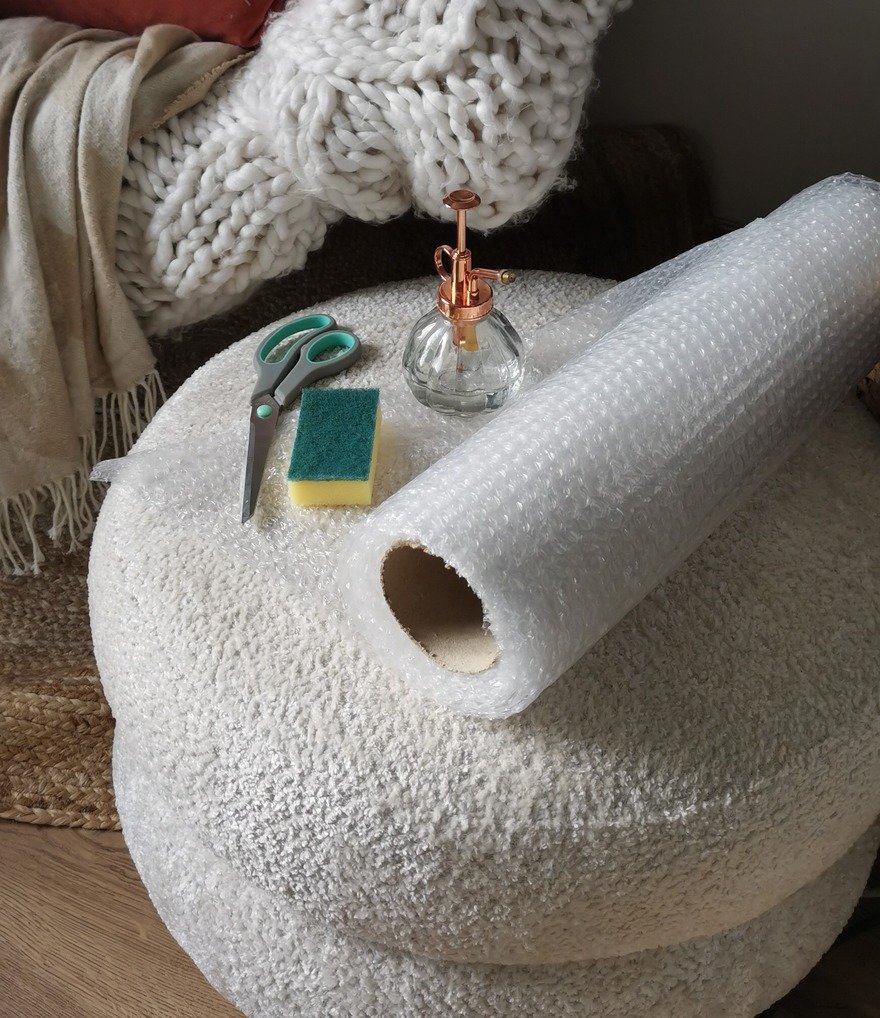
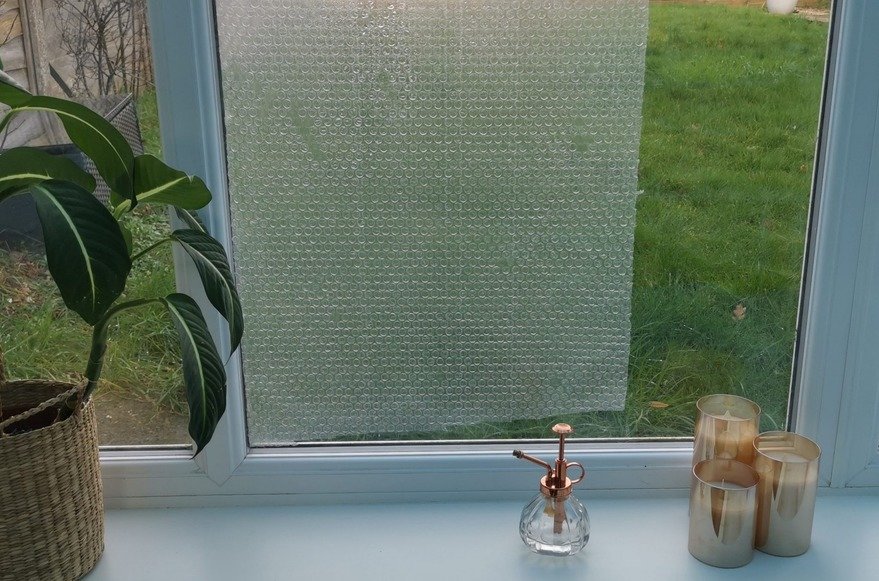
"All you need to do is cut a sheet of bubble wrap to fit your window, lightly mist the glass with water, and press it against the pane, the surface tension holds it in place with no tape or adhesive needed. It lets light in while keeping the cold out.
"It's not something I'd recommend for your main living areas, but for rooms that don't see much use during winter, a guest bedroom, a basement, a utility room, it's a genuinely effective hack. You'd be surprised how much of a difference it makes to the feel of a room and potentially your energy bill."
"Two important tips I'd give though are firstly not to overly mist your windows. Too much moisture behind the bubble wrap can cause condensation. And secondly, make sure that you lay the bubble wrap bubble side to the window.
"It seems counter intuitive, as you'd presume that the other side has more area to stick... but by doing it this way, you get an extra layer of insulation."
Georgia county jail officials panicked, going into lockdown when an inmate convicted of murder disappeared — only to realize more than 12 hours later that the missing man was still at the courthouse. Apparently, the cops forgot to retrieve him.
"There was a mix-up of who was going to take the inmate down, and ultimately, he was left inside the holding cell," explained Jonesboro's Clayton County Sheriff Levon Allen, via The Independent, after sheepish officers finally found Julian Brooks Deloach still waiting for them at the courthouse. — Read the rest
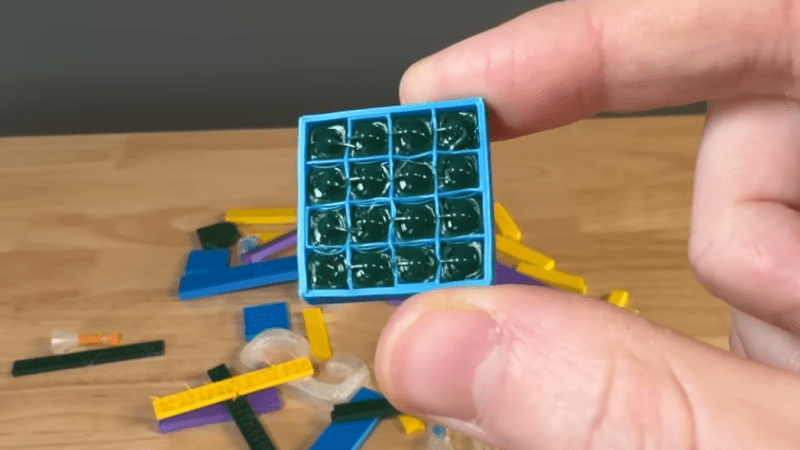
[JanTec Engineering] was fascinated by the idea of using a 3D printer’s hot end to inject voids and channels in the infill with molten plastic, leading to stronger prints without the need to insert hardware or anything else. Inspiration came from two similar ideas: z-pinning which creates hollow vertical channels that act as reinforcements when filled with molten plastic by the hot end, and VoxelFill (patented by AIM3D) which does the same, but with cavities that are not uniform for better strength in different directions. Craving details? You can read the paper on z-pinning, and watch VoxelFill in (simulated) action or browse the VoxelFill patent.
With a prominent disclaimer that his independent experiments are not a copy of VoxelFill nor are they performing or implying patent infringement, [JanTec] goes on to use a lot of custom G-code (and suffers many messy failures) to perform some experiments and share what he learned.
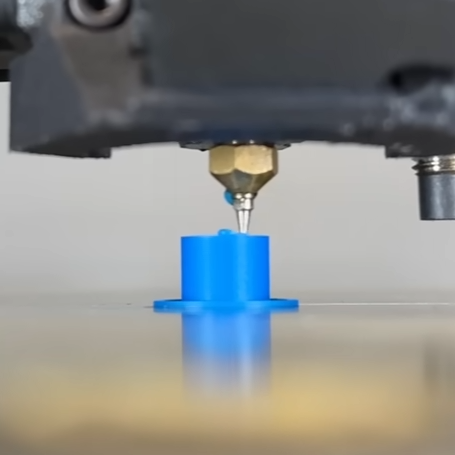
Using an airbrush nozzle as a nozzle extension gains about 4 mm of extra reach.
One big finding is that one can’t simply have an empty cylinder inside the print and expect to fill it all up in one go. Molten plastic begins to cool immediately after leaving a 3D printer’s nozzle, and won’t make it very far down a deep hole before it cools and hardens. One needs to fill a cavity periodically rather than all in one go. And it’s better to fill it from the bottom-up rather than from the top-down.
He got better performance by modifying his 3D printer’s hot end with an airbrush nozzle, which gave about 4 mm of extra length to work with. This extra long nozzle could reach down further into cavities, and fill them from the bottom-up for better results. Performing the infill injection at higher temperatures helped fill the cavities more fully, as well.
Another thing learned is that dumping a lot of molten plastic into a 3D print risks deforming the print because the injected infill brings a lot of heat with it. This can be mitigated by printing the object with more perimeters and a denser infill so that there’s more mass to deal with the added heat, but it’s still a bit of a trouble point.
[JanTec] put his testing hardware to use and found that parts with infill injection were noticeably more impact resistant than without. But when it came to stiffness, an infill injected part resisted bending only a little better than a part without, probably because the test part is very short and the filled cavities can’t really shine in that configuration.
These are just preliminary results, but got him thinking there are maybe there are possibilities with injecting materials other than the one being used to print the object itself. Would a part resist bending more if it were infill injected with carbon-fibre filament? We hope he does some follow-up experiments; we’d love to see the results.
 Log in